7 Best Microchip Cat Doors That Keep Strays Out (October 2026)
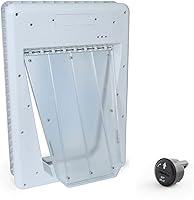
The best microchip cat doors include the SureFlap Microchip Cat Flap for most cats, the SureFlap Microchip Pet Door for a larger opening, and the SureFlap DualScan Microchip Cat Door for exit control.
On this page (5 sections)
The SureFlap Microchip Cat Flap is the best microchip cat door for most homes because it recognizes your cat's ID for entry, stores up to 32 identities and fits a common cat-door opening. Pick the DualScan if you need to set exit permissions by cat, or the larger SureFlap Pet Door if your cat needs more room.
A microchip door is useful when your cat has a registered chip and neighborhood animals have learned to come inside. The main choices are the opening size, whether the door controls entry only or exit too, and whether you want a timer or app controls.
For the most direct comparison, start with our guide to automatic and microchip doors. If you are choosing between two popular brands, see our SureFlap vs Cat Mate comparison.
Our picks at a glance
-
1

-
2

-
3

- 4
 Check it
SureFlap Microchip Pet Door Connect
Best for app controls - 5
 Check it
PetSafe Microchip Cat Door, 4-Way Lock
Best for manual lock choices - 6
 Check it
Cat Mate 360 Microchip Cat Door
Best for four-way settings - 7
 Check it
Cat Mate Elite Microchip Cat Door with Timer
Best for scheduled lock times
The best microchip cat doors for different homes
The standard SureFlap is the strongest all-around fit for selective entry, while the other models add a larger opening, individual exit settings, app controls or timed locks. Match those features to your cats' routines and the opening you can install.
SureFlap Microchip Cat Flap: Best for most cats
- Selective entry using your cat's microchip
- Stores up to 32 identities
- Opening is 4 3/4 x 5 5/8 in
- Uses 4 AA batteries
This is the straightforward pick for a household that wants registered cats to enter while other animals are kept out. It scans on entry and allows any animal to exit.
Pros
- Selective entry
- Stores up to 32 identities
- Works with several common microchip formats
Cons
- Does not restrict which animals can exit
- Opening may be too small for some cats
The SureFlap Microchip Cat Flap is the best starting point if your main goal is to let your own cat enter while discouraging strays. It reads the cat's implanted ID on entry and stores up to 32 identities, so it can suit a multi-cat home without asking pets to wear a collar tag.
Its opening measures 4 3/4 in high by 5 5/8 in wide. Measure the narrowest part of your cat and compare it with that opening before ordering, especially if your cat is broad or long-haired.
This model scans on entry only. Any animal can exit, so it is not the choice if you need to keep a particular cat indoors while other cats go outside.
It runs on four AA alkaline batteries, which are not included. SureFlap estimates up to 12 months of battery life depending on use, and a red light flashes when the batteries are low.
Choose it for a typical cat-sized opening and simple microchip entry. For a closer look at its features, see our SureFlap Microchip Cat Flap review.
SureFlap Microchip Pet Door: Best for a larger opening
- Selective entry using a pet's microchip or RFID collar tag
- Stores up to 32 identities
- Opening is 6 11/16 x 7 in
- Programmable curfew
The wider opening suits larger cats and small dogs. It adds a programmable curfew, while any animal can still exit.
Pros
- Larger opening than the cat flap
- Programmable curfew
- One RFID collar tag included
Cons
- Does not restrict which animals can exit
- Uses C batteries
The SureFlap Microchip Pet Door gives larger cats and small dogs a 6 11/16 x 7 in opening. It also allows you to set a curfew time, which can help you establish hours when the door locks and opens.
Like the smaller SureFlap, it scans on entry only. Any animal can leave, so a curfew is the tool for managing access at certain times, not individual exit permissions.
The door stores up to 32 identities and uses four C batteries, which are not included. A SureFlap RFID collar tag is included for a pet without a microchip.
The larger frame needs a larger opening, so compare the cut-out and installation space before choosing it over the cat flap. For a side-by-side size discussion, read SureFlap Pet Door vs Cat Flap.
SureFlap DualScan Microchip Cat Door: Best for exit control
- Sets exit permissions for each pet
- Stores up to 32 pets
- Opening is 4 3/4 x 5 5/8 in
- Uses 4 AA batteries
DualScan adds individual exit permissions for households that need to keep specific cats indoors. The opening matches the standard SureFlap cat flap.
Pros
- Controls exit permissions by pet
- Stores up to 32 pets
- Can be installed in doors, windows or walls
Cons
- Same opening size as the standard cat flap
- Mounting accessories may be needed
The SureFlap DualScan is the pick for households that need to control which cats can leave. Its two-sided scanning lets you set exit permissions for each pet, while it also stores up to 32 pets.
The opening is the same 4 3/4 x 5 5/8 in size as the standard SureFlap cat flap. That makes it worth considering when the opening fits your cats but the household needs more control over who can go out.
It uses four AA batteries, not included, and can be installed in doors, windows or walls with the needed accessories. Check what accessories your installation requires before planning a glass or wall fit.
Choose DualScan when separate exit rules matter. If all cats can leave freely, the standard model has the simpler feature set.
SureFlap Microchip Pet Door Connect: Best for app controls
- App control through a separately sold Hub
- Remote lock and open
- Curfew changes and activity monitoring
- Opening is 6 11/16 x 7 in
This larger SureFlap door adds remote settings and activity monitoring through the app, with a separately sold Hub. It scans for entry, while any animal can exit.
Pros
- Remote lock and curfew controls
- Activity monitoring
- Larger opening for cats and small dogs
Cons
- SureFlap Hub required and sold separately
- Does not restrict which animals can exit
The SureFlap Microchip Pet Door Connect is the app-enabled option for a household that wants to manage access remotely. Through the Sure Petcare app, you can lock or open the door, change curfew times and monitor pet activity.
The SureFlap Hub is required and sold separately. This door has the larger 6 11/16 x 7 in opening and uses four C batteries, which are not included.
Connect scans for entry, but any animal can exit. If you need to set exit permissions separately for each cat, consider DualScan instead.
The larger opening can suit cats and small dogs, but do not assume it fits every pet by the label alone. Compare your pet's measurements with the opening before buying.
PetSafe Microchip Cat Door, 4-Way Lock: Best for manual lock choices
- Reads 15-digit microchip IDs
- Stores up to 40 pets
- Four manual lock settings
- Weather stripping and magnetic latches
PetSafe combines microchip access with four manual lock settings. Check your cat's chip format before choosing it, since it reads 15-digit IDs.
Pros
- Four manual lock settings
- Stores up to 40 pets
- Weather stripping and magnetic latches
Cons
- Reads 15-digit microchip IDs
- Extra accessories needed for metal, glass, brick or wall installation
PetSafe combines microchip access with a four-way manual lock. You can set it to locked, unprotected, enter only or exit only, giving you a clear way to change access without app controls.
It reads 15-digit microchip IDs and can store up to 40 pets. PetSafe says collar keys are sold separately for cats without a compatible microchip.
Two magnetic latches and built-in weather stripping are part of the design. The door fits most wood, PVC and uPVC doors, while installation in metal, glass, brick or a wall requires additional accessories sold separately.
Check your cat's chip number before choosing this model. It is a practical fit if the 15-digit format works for your pet and manual lock settings matter to you.
Cat Mate 360 Microchip Cat Door: Best for four-way settings
- Reads compatible microchips or separately sold ID discs
- Stores up to 30 cats
- Four access settings
- Brush seal and magnetic closure
This Cat Mate offers four access settings and can store up to 30 cats. Confirm chip compatibility first, since it does not work with 10-digit microchips or codes containing letters.
Pros
- Four access settings
- Brush seal and magnetic closure
- Suitable for several door and glazing types
Cons
- Does not support 10-digit microchips or codes containing letters
- Wall liner and adapter may be needed for thicker walls
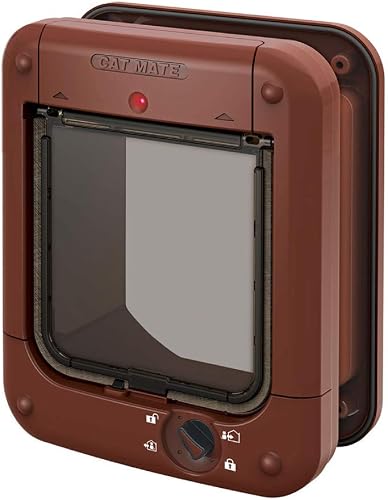
Cat Mate 360 offers four access settings: in and out, in only, out only or fully locked. It stores up to 30 cats and reads compatible microchips or a separately sold Cat Mate ID Disc.
Compatibility is the key check. It works with 15-digit ISO and AVID microchips, but does not support 10-digit microchips or codes containing letters.
The flap opening measures 5 3/4 x 5 3/4 in. A brush seal and magnetic closure help manage drafts and rain, and the frame can fit several materials, including wood, metal, uPVC and glazing.
For a wall thicker than 2 in, the model requires a wall liner and adapter sold separately. Choose it if its chip compatibility and four-way controls fit your needs.
Cat Mate Elite Microchip Cat Door with Timer: Best for scheduled lock times
- Selective entry for recognized microchips
- Four-way timer-controlled locking
- Designed for small to medium cats
- Battery-powered
The timer lets you set access times for overnight routines, while recognized cats can enter and all cats can exit. Check the cut-out dimensions before installation.
Pros
- Timer-controlled lock settings
- Selective entry
- Designed for small to medium cats
Cons
- Does not restrict which animals can exit
- Requires a cut-out sized for the frame
The Cat Mate Elite Microchip Cat Door with Timer suits a small or medium cat household that wants access to follow a schedule. Its four-way timer-controlled lock can help you set routines, such as keeping cats indoors overnight.
The door uses microchip-controlled selective entry, while all cats can exit. That makes the timer useful for setting shared access hours, but it does not provide individual exit permissions like SureFlap DualScan.
Check the frame and cut-out dimensions before planning installation. The overall size is 9 3/4 x 10 3/8 in, and the cut-out is 7 1/16 x 8 1/16 in.
Choose this Cat Mate when scheduled locking is more useful than app access or pet-by-pet exit settings. Confirm installation details for your door or wall before cutting.
How we compared microchip cat doors
We compared the access rules, opening dimensions, chip compatibility, household capacity and controls for each door. Our score weighs specs and features against what you need from a microchip cat door.
The top-scoring choice combines selective entry with a clear fit for typical cats and a memory capacity of up to 32 identities. Models that add features for specific needs rank next, including separate exit permissions, a larger opening, remote settings or timed locks.
Check chip compatibility before you buy. The PetSafe model here reads 15-digit IDs, while Cat Mate 360 has stated limits for 10-digit numbers and codes containing letters.
If you are unsure of your cat's chip number, ask your veterinarian, shelter or rescue.
The words “microchip door” can cover different access rules. Some doors only check identity when a pet enters, while DualScan lets you set exit permissions.
Read the feature summary for the exact model you are considering.
| Product | Best for | Opening | Stored identities | Power | Our score |
|---|---|---|---|---|---|
| SureFlap Microchip Cat Flap | most cats | 4 3/4 x 5 5/8 in | Up to 32 | 4 AA batteries, not included | 9.1 |
| SureFlap Microchip Pet Door | a larger opening | 6 11/16 x 7 in | Up to 32 | 4 C batteries, not included | 8.6 |
| SureFlap DualScan Microchip Cat Door | exit control | 4 3/4 x 5 5/8 in | 4 AA batteries, not included | 8.2 | |
| SureFlap Microchip Pet Door Connect | app controls | 6 11/16 x 7 in | 4 C batteries, not included | 8.0 | |
| PetSafe Microchip Cat Door, 4-Way Lock | manual lock choices | 7.8 | |||
| Cat Mate 360 Microchip Cat Door | four-way settings | 5 3/4 x 5 3/4 in | 7.6 | ||
| Cat Mate Elite Microchip Cat Door with Timer | scheduled lock times | 7.5 |
What to check before choosing a microchip cat door
Start with the opening and your cat's measurements. Frame size and cut-out size are different from the space your cat passes through, so use the stated opening dimensions when checking whether your pet can fit.
Next, decide whether you need entry control, exit control or both. A selective-entry door can keep unregistered animals from coming in, but it may still let any animal out.
Which microchip cat door fits your cat's chip?
The best microchip cat door for your cat is one that recognizes its specific chip format. Compatibility varies: the SureFlap products list support for common microchip types, PetSafe specifies 15-digit IDs, and Cat Mate 360 names 15-digit ISO and AVID chips while excluding some formats.
If your cat's chip number is unclear, ask a veterinarian or animal shelter to check it. A separately sold RFID or ID collar tag is an option for some models if your pet does not have a compatible implanted chip.
Do you need selective exit?
Choose a door with individual exit settings if one cat must remain indoors while other cats go out. SureFlap DualScan specifically offers exit permissions for each pet.
If all your cats can leave, an entry-only model may cover the main need: recognizing your cats when they come back inside. A four-way manual lock or a timer can still help manage household routines, but those controls are different from setting exit rules for each cat.
Does the opening fit your cat?
Compare your pet's size with the flap opening, not just the frame dimensions. The standard SureFlap opening is 4 3/4 x 5 5/8 in, while the larger SureFlap Pet Door opening is 6 11/16 x 7 in.
The Cat Mate 360 opening is 5 3/4 in square. Give your cat room to pass comfortably, and measure the location where the door will be installed before you choose a model.
Will you install the door in a wall or glass?
Check the installation materials for your specific surface. Several SureFlap models can go in doors, windows or walls, but accessories may be needed for glass and wall installations.
Cat Mate 360 calls for a wall liner and adapter for walls thicker than 2 in. PetSafe says extra accessories are required for metal, glass, brick and wall installation, so include those requirements in your plan.
If you are considering app controls, confirm the extra equipment too. SureFlap Pet Door Connect requires a separately sold Hub.
Are microchip cat doors right for your household?
A microchip door is a strong fit when you want your own registered cats to enter without opening access to neighborhood animals. It is also useful if you want an electronic lock with a routine, such as a curfew or a set time for keeping cats inside.
Consider another style if your cat does not have a compatible chip and you do not want to use a collar tag. Check whether your chosen door sells a compatible tag separately before deciding.
For general automatic door options, our guide to electronic pet doors explains the types of controls you may see. If your main concern is a stray entering, compare selective entry carefully with models that also let you manage exit.
Which microchip cat door should you choose?
Choose the SureFlap Microchip Cat Flap for a straightforward selective-entry door with a typical cat opening. Pick the SureFlap DualScan when individual exit permissions matter, and the SureFlap Microchip Pet Door when your pet needs a larger opening.
Choose the PetSafe if you want four manual lock settings and your cat has a compatible 15-digit chip. Choose Cat Mate 360 for its four access settings after checking chip compatibility, or the Cat Mate Elite if a timer fits your routine.
Before ordering, confirm the chip format, opening size, installation surface and any accessories you need. For help comparing the main automatic door types, start with our automatic and microchip door guide.
Our top 3 picks at a glance
-
1
-
2
-
3
Frequently asked questions
Do microchip cat doors keep stray cats out?
A microchip door can limit entry to pets whose IDs have been programmed into it. The SureFlap cat models here store up to 32 identities, while PetSafe stores up to 40 and Cat Mate 360 stores up to 30.
Check what the door allows on exit, too.
Several picks scan only for entry, so any animal can leave.
Can one microchip cat door work for multiple cats?
Yes. The SureFlap models in this guide store up to 32 identities, PetSafe stores up to 40 pets, and Cat Mate 360 stores up to 30 cats.
Before buying, check that each cat's microchip format is supported and that the opening fits the largest cat using it.
What is the difference between selective entry and exit control?
Selective entry checks a pet's ID before allowing it to enter. On models that scan only on entry, any animal can exit.
The SureFlap DualScan lets you set exit permissions for each pet, which can help when one cat needs to stay indoors while others come and go.
Do microchip cat doors need batteries?
The SureFlap Microchip Cat Flap and DualScan use 4 AA batteries, while the SureFlap Pet Door and Connect use 4 C batteries. The Cat Mate 360 also uses 4 AA batteries.
Check the battery type and plan for replacement.
Battery life depends on use where a duration is specified.