9 Best Insulated Dog Doors to Keep Out Winter Drafts (October 2026)
The best insulated dog doors include the PetSafe Extreme Weather Aluminum Dog Door for a metal frame, the PetSafe Extreme Weather Plastic 3-Flap Dog Door for a paintable frame, and the Petoasis 3-Flap Heavy-Duty Aluminum Dog Door for replaceable flaps.
On this page (5 sections)
The best insulated dog door for most homes is the PetSafe Extreme Weather Aluminum model, with three flexible flaps, a magnetic seal and an aluminum frame. If you want a paintable frame, choose the PetSafe plastic version; for hard panels with an air gap, consider the Ideal Air Seal.
A multi-flap door can reduce drafts, but it still leaves an opening through an exterior wall or door. The right fit, a flap your dog can push through and a closing panel for times you don't need access all matter.
Start with our guide to whether dog doors let in cold air. It explains what contributes to drafts and what a better seal can and can't do.
Our picks at a glance
-
1
 Best for a metal frame
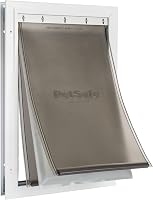
PetSafe Extreme Weather Aluminum Dog Door, Large
9.2/10 our score
See it on Amazon -
2
 Best for a paintable frame
PetSafe Extreme Weather Plastic 3-Flap Dog Door, Large
8.4/10 our score
See it on Amazon -
3
 Best for replaceable flaps
Petoasis 3-Flap Heavy-Duty Aluminum Dog Door
8.1/10 our score
See it on Amazon
- 4
 Check it
PetSafe Extreme Weather Plastic Pet Door, Medium
Best for medium dogs - 5
 Check it
Ideal Pet Products Air Seal Pet Door
Best for hard panels - 6
 Check it
MIAOTONG 3-Flap Steel Dog Door with Lock Panel, Large
Best for a metal closing panel - 7
 Check it
VOSOIR 3-Flap Insulated Aluminum Wall Dog Door, Large
Best for wall installation - 8
 Check it
URSPET 3-Flap Insulated Steel Frame Dog Door, Large
Best for a compatible replacement opening - 9
 Check it
3-Flap Extreme Weather Aluminum Dog Door, X-Large
Best for extra-large dogs
The best insulated dog doors for different homes
The PetSafe aluminum model has the strongest match for draft control in this group, while the other picks suit different door materials, sizes and installation locations. Compare your opening and door thickness before deciding.
PetSafe Extreme Weather Aluminum Dog Door, Large: Best for a metal frame
- 3 flexible flaps
- Magnetic seal
- Aluminum frame
- Fits doors 1.5–2 in thick
Three insulated flaps and a magnetic seal suit buyers focused on reducing drafts. The aluminum frame and closing panel add a sturdy frame and a way to control access.
Pros
- Three-flap insulation
- Magnetic seal
- Closing panel included
Cons
- Fits a narrower door thickness range than some picks
- Large size may not suit smaller dogs
The PetSafe Extreme Weather Aluminum Dog Door pairs three flexible flaps with a magnetic seal. PetSafe says its three-flap insulation blocks 3 times more thermal energy than a standard pet door.
Its metal frame has reinforced aluminum corners, and a slide-in closing panel controls access and helps keep stray animals out. The door fits most exterior doors made from paneled wood, PVC or metal when they're 1 1/2–2 in thick.
Choose this model if you want a metal frame and a stated door thickness range that matches your door. Measure the dog opening and your pet before cutting, since "large" doesn't tell you whether the flap will suit your dog.
PetSafe Extreme Weather Plastic 3-Flap Dog Door, Large: Best for a paintable frame
- Three-flap design
- Paintable plastic frame
- Center insulated flap
- Fits doors 1 5/8–2 1/4 in thick
The paintable frame can match your door, while three flaps add a layer between your home and outdoor air. A snap-on panel controls pet access.
Pros
- Paintable frame
- Three-flap design
- Wider compatible thickness range
Cons
- Plastic frame instead of metal
- Second closing panel is sold separately
This PetSafe plastic model gives you the same basic three-flap idea in a paintable plastic frame. Its center flap is insulated, and the frame can be painted to match your door.
It fits standard paneled, wood, metal and PVC doors 1 5/8–2 1/4 in thick. The snap-on closing panel restricts access, while a second panel is available separately if you want another layer when the door is closed.
Pick it if appearance and a wider compatible thickness range matter more than a metal frame. Check whether your dog can comfortably use the large opening and whether you need to buy the extra panel.
Petoasis 3-Flap Heavy-Duty Aluminum Dog Door: Best for replaceable flaps
- Three flaps with an insulated middle layer
- Aluminum alloy frame
- Magnetic closure
- Fits doors up to 2.4 in thick
An aluminum alloy frame and three flaps suit buyers seeking a sturdy door with an insulated center. Petoasis also offers a replacement service for damaged flaps.
Pros
- Three-flap insulation
- Aluminum alloy frame
- Replacement flap service
Cons
- Minimum compatible door thickness isn't specified here
- Check the opening dimensions before buying
Petoasis combines a three-flap design with an insulated middle layer and an aluminum alloy frame. Magnetic flaps are meant to close after your dog passes through, and the brand describes the frame as rust resistant.
This model fits doors up to 2.4 in thick. Petoasis also offers one replacement service for damaged flaps, which may help with upkeep over time.
Choose it if you want an aluminum frame and flap replacement support. Confirm the minimum door thickness and cutout dimensions for your installation before ordering.
PetSafe Extreme Weather Plastic Pet Door, Medium: Best for medium dogs
- Medium size
- Three-flap design
- Center insulated flap
- Fits doors 1 5/8–2 1/4 in thick
This medium model uses the same three-flap approach as the large PetSafe plastic door. Its size is intended for medium dogs, so measure your pet and the planned opening first.
Pros
- Medium size
- Insulated center flap
- Paintable white frame
Cons
- Not sized for larger dogs
- Second closing panel is sold separately
The medium PetSafe Extreme Weather door suits dogs that need a smaller opening than the large models above. Its three-flap system includes an insulated center flap, and the white plastic frame can be painted.
It fits standard doors 1 5/8–2 1/4 in thick. The snap-on panel lets you block access, and a second panel is sold separately for another layer of closure.
Choose this when your dog fits a medium door and the measurements work for your planned cutout. The size label alone isn't enough, so check your dog's height and width against the usable opening.
Ideal Pet Products Air Seal Pet Door: Best for hard panels
- Dual-pane LEXAN hard panels
- Air gap between panels
- Fits doors 1 1/4–1 3/4 in thick
- Cutout 8 1/4 x 9 7/8 in
Dual-pane hard panels with an air gap offer a different approach from flexible multi-flap doors. A spring-loaded slide lets you keep the opening closed.
Pros
- Air gap between hard panels
- Spring-loaded locking slide
- Fits some thinner doors
Cons
- Hard panels may feel different for pets used to soft flaps
- Cutout dimensions need careful checking
The Ideal Air Seal uses dual-pane hard panels with an air gap instead of three flexible flaps. It also has a spring-loaded locking slide to keep your pet in or out.
The flap measures 10 1/2 x 15 3/4 in, and the door fits thicknesses from 1 1/4–1 3/4 in. Its cutout is 8 1/4 x 9 7/8 in, so compare that with your existing opening before choosing it.
Consider it if your dog can use hard panels and you want an air-gap design. For dogs used to pushing through soft flaps, the panel style may take adjustment.
MIAOTONG 3-Flap Steel Dog Door with Lock Panel, Large: Best for a metal closing panel
- Three-flap design
- Metal frame
- Sliding lock panel
- Fits doors 1.2–2 in thick
The three-flap design is paired with a metal closing panel and a stated fit for wood, PVC and metal doors. Check the opening and door thickness before cutting.
Pros
- Metal closing panel
- Three-flap insulation
- Pre-assembled
Cons
- Large size needs a suitable opening
- Confirm screw lengths for your door
MIAOTONG pairs three flaps with a metal sliding lock panel. It fits wood, PVC and metal doors from 1.2–2 in thick, and comes pre-assembled with a template and instructions.
The stated flap dimensions are 10 7/8 x 17 1/2 in. Check that opening against your dog's size, then choose the correct screw length for your door thickness.
Choose this if you want a metal closing panel and a large door opening. The door thickness and flap measurements should both fit before you cut.
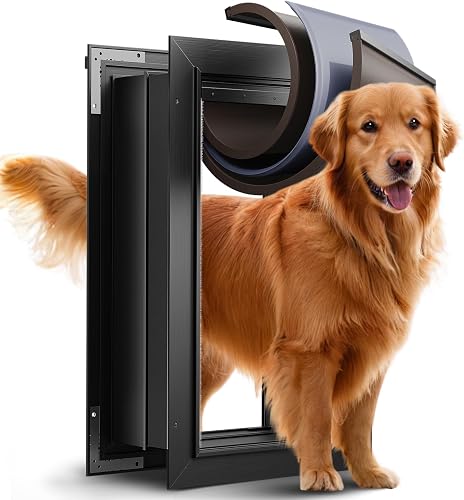
VOSOIR 3-Flap Insulated Aluminum Wall Dog Door, Large: Best for wall installation
- Three flaps
- Aluminum frame
- Expandable channel for 3.95–7.5 in walls
- Closing panel included
This large wall door has three flaps and an expandable channel for walls within its stated thickness range. Measure the wall and opening closely before choosing it.
Pros
- Aluminum frame
- Three-flap design
- Closing panel and locks included
Cons
- For walls rather than standard doors
- Requires a larger wall cutout
VOSOIR is the wall-mounted option here, with a three-flap design and an aluminum frame. Its expandable channel fits walls 3.95–7.5 in thick, and it includes a closing panel and locks.
The stated flap opening is 18.7 x 9.92 in, with a wall cutout measuring 10.6 x 18.9 in. Confirm those dimensions and check for framing, wiring or pipes before planning a wall opening.
Pick this for a wall installation where the channel matches your wall thickness. For a door installation, compare models designed for doors instead.
URSPET 3-Flap Insulated Steel Frame Dog Door, Large: Best for a compatible replacement opening
- Two magnetic outer flaps
- Insulated center layer
- Steel frame
- Fits doors 1.7–2.4 in thick
URSPET describes this model as fitting compatible PetSafe Extreme Weather large cutouts. Verify the existing opening dimensions and door thickness before replacing a door.
Pros
- Magnetic outer flaps
- Steel frame
- Integrated lock handle
Cons
- Cutout compatibility needs measuring
- Large size may not suit smaller pets
URSPET uses two magnetic outer flaps and an insulated center layer in a steel frame. It fits doors 1.7–2.4 in thick and has an integrated lock handle to control access.
The brand describes it as compatible with certain PetSafe Extreme Weather large cutouts, about 11.2 x 18.1 in. Measure the existing opening and compare flap dimensions before relying on that fit.
Consider it if you're replacing a compatible large door and want a steel frame. Check both cutout size and door thickness before buying.
3-Flap Extreme Weather Aluminum Dog Door, X-Large: Best for extra-large dogs
- Three flaps
- Aluminum frame
- Flap opening 13 3/5 x 24 1/5 in
- Fits doors 1 3/16–2 1/4 in thick
The extra-large opening and three-flap setup suit buyers whose dogs need more room to pass through. Measure your dog and door before making a cut.
Pros
- Extra-large flap opening
- Aluminum frame
- Closing panel included
Cons
- Large opening needs careful draft planning
- Dog-door cutout must be measured
This extra-large aluminum door has two magnetic vinyl flaps and an insulated middle flap. Its stated flap opening is 13 3/5 x 24 1/5 in, and the door fits thicknesses from 1 3/16–2 1/4 in.
The included metal closing panel gives you a way to block access. Measure your dog's widest point and shoulder height before choosing the opening, since a larger cutout can also leave more area to seal around.
Pick it for an extra-large dog that needs the wider opening. Make sure the cutout and flap size suit both your door and your pet.
What features help an insulated dog door block drafts?
Multiple flaps, magnetic edges and a tight frame fit are the main features to compare when reducing winter drafts. The design can slow air movement, but the installation and flap closure still affect the result.
A three-flap door adds layers between the outside and inside. Some models use an insulated center flap, while the PetSafe aluminum model also specifies a magnetic seal.
The Ideal Air Seal takes a different route with dual-pane hard panels and an air gap. Choose a design your dog can use reliably, since a door that stays partly open won't help much with drafts.
How do you choose the right size and installation type?
Measure your dog, the door thickness and the cutout before choosing a model. A large flap is useful only if your pet can pass through it comfortably and the frame fits the planned opening.
Measure your dog's width at the widest point and height to the top of the back, then compare those numbers with the usable flap opening. Our guide on how to measure for a dog door walks through the fit check.
Check the thickness range for the door model, too. Wall doors need a channel sized for the wall, while a standard door model may not work for that installation.
For a wall opening, see our guide to the best wall dog doors. If you need a pet door in a sliding glass door without cutting, compare sliding glass door inserts.
What should you check before installing a dog door for winter?
Confirm the opening, door thickness, flap movement and closure before installing an insulated dog door. A careful fit helps prevent gaps around the frame and lets your pet use the door without forcing it.
Check the manufacturer's template and installation instructions for the exact cutout. Keep the area clear of wiring, pipes and structural framing, especially if you're cutting through a wall.
After installation, make sure the flaps swing freely and meet their seals when they close. Use the closing panel when your dog is indoors and access isn't needed, and inspect the flap edges as weather and daily use wear them.
Read our guide to winterizing a dog door for seasonal checks. If you're still comparing door types, how to choose a dog door lays out the key questions.
Which insulated dog door should you choose?
Choose the PetSafe aluminum model if you want three flexible flaps, a magnetic seal and an aluminum frame. Pick the paintable PetSafe plastic door if matching the frame to your door matters, or the Ideal Air Seal if your dog can use hard panels and its air-gap design fits your opening.
For a wall installation, choose a wall model only after checking the channel and cutout dimensions. Before buying, measure your dog and door, then use our guide to stop cold air from coming through a dog door.
Our top 3 picks at a glance
-
1
Best for a metal frame
PetSafe Extreme Weather Aluminum Dog Door, Large
9.2/10 our score
See it on Amazon -
2
Best for a paintable frame
PetSafe Extreme Weather Plastic 3-Flap Dog Door, Large
8.4/10 our score
See it on Amazon -
3
Best for replaceable flaps
Petoasis 3-Flap Heavy-Duty Aluminum Dog Door
8.1/10 our score
See it on Amazon
Frequently asked questions
Do insulated dog doors keep cold air out?
Insulated dog doors can help reduce drafts, especially when they use multiple flaps, a magnetic seal or an air gap. They don't make an opening airtight, so fit, flap condition and installation matter.
Choose a model that fits your door and dog, then check the seals as part of seasonal care.
Are 3-flap dog doors better for winter?
Three-flap designs add layers between the outdoors and your home, and some include a magnetic seal or insulated center flap. That can help limit air movement compared with a basic single flap.
The fit and how freely your dog can pass through still matter.
A flap that doesn't close well can leave a gap.
How do I choose the right size insulated dog door?
Measure your dog's widest point and height, then compare those measurements with the usable flap opening. Also check the door thickness and required cutout before you buy.
Use our dog door measuring guide for a step-by-step fit check.
Can I install an insulated dog door in a wall?
Yes, but choose a model made for wall installation and confirm its channel fits your wall thickness. Wall doors need a tunnel through the wall, and the cutout must clear framing and utilities.
Our guide to wall dog doors for siding, stucco and brick covers the main fit questions.
How can I reduce drafts around an existing dog door?
Check that the flap closes fully, the magnetic edge meets its seal, and the frame has no gaps around it. Replace damaged flaps and use the closing panel when your pet is indoors for the night.
See our guide on winterizing a dog door for more steps.