How to Winterize a Dog Door Before the Cold Hits
To winterize a dog door, check the flap and frame for gaps, clear the seals, and add a compatible closing panel when the door isn't in use. If cold air still gets through, consider a multi-flap insulated door that fits your opening.
On this page (6 sections)
To winterize a dog door, check the flap and frame for gaps, clear the seals, and use a compatible closing panel when the door isn't needed. If cold air still comes through, consider a multi-flap insulated door that fits your opening.
Start with the parts you already have. A flap that closes well and a clean frame can help reduce drafts without blocking your dog's access.
How do you winterize a dog door step by step?
Inspect, clean, check the fit, and use the closing panel when practical. These steps can help you find common sources of drafts before you decide whether to replace parts or the door.
- Look for a torn, cracked, warped, or loose flap.
- Check whether it hangs straight and meets the frame when closed.
- Remove fur and dust from the flap edges and frame.
- Check the area around the frame for gaps or loose trim.
- Test the closing panel, if your door has one.
- Watch the flap close after your dog uses it.
Don't tape the flap shut if your dog needs to go outside. If you use a temporary cover, remove it before your dog needs access.
For broader guidance on draft sources, see whether dog doors let in cold air. If wind is pushing the flap open, our guide to keeping a dog door from blowing open covers that problem.
What should you inspect on the flap and frame?
Look for damage, poor contact, and dirt that stops the flap from closing. A flap that looks intact can still leave a gap if it hangs crooked or catches on the frame.
Clean around the edges with a method allowed by the door maker. Don't add oil, adhesive, or a weatherstrip where it could stop the flap from swinging or closing.
Check the frame and nearby trim for visible gaps. If the opening around the frame is the source of a draft, follow the door's installation guidance or ask a qualified installer about a suitable repair.
When should you replace a flap?
Replace a flap when it is damaged or no longer closes properly, after checking that the replacement is made for your door model. Measure and confirm compatibility before ordering, since a flap that doesn't fit won't seal the opening.
The PetSafe Freedom replacement flap is listed as compatible with several PetSafe door models, including the Extreme Weather Pet Door. It's a medium flap with a magnetic closure, so check your existing door model and flap size first.
A replacement flap can help when the flap itself is worn. It won't fix gaps around the frame or an installation that doesn't fit the door.
Does a closing panel help keep a dog door warmer?
A properly fitting closing panel blocks the opening when your dog doesn't need to use the door. It can be a simple winter step, but it also removes your dog's access until you open the door again.
Use the panel made for your door and make sure it latches or snaps into place as intended. Keep it accessible so you can remove it when your dog needs to go out.
The Viecam snap-on closing panel is for certain PetSafe Extreme Weather door models and sizes. Its compatibility details include a specific panel model and an inner-panel measurement, so check the back of your existing panel and measure the inner size before choosing it.
Don't assume this panel fits every PetSafe door. Confirm the model and size before you order.
Can insulation help if the door still feels drafty?
A multi-flap door adds barriers across the opening, but it must fit the door and suit your dog's use. Check the frame thickness range, opening size, and installation instructions before replacing an existing door.
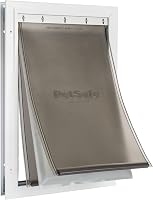
The PetSafe Extreme Weather door has 3 flaps, including a center insulated flap, and a snap-on closing panel. PetSafe says its three-flap system is more energy efficient than a traditional single-flap door, and gives a temperature range of -10 to 100°F.
This large model is designed for standard paneled, wood, metal, and PVC doors within its stated thickness range. Measure your door and your dog before buying, and follow the installation guide.
If you're comparing options, see our guide to best insulated dog doors. Choose based on the door opening, fit, and type of access you need.
When does an aluminum frame make sense?
An aluminum frame may suit you if you want a metal frame and a multi-flap design. The PETCOMING large door has 3 flaps, magnetic strips, dust strips, and a closing panel with a security lock.
Its stated fit range is 1.26 to 2.08 in thick, and its flap opening is 18.7 x 9.92 in. Check both measurements against your installation spot and your dog's size before choosing it.
The maker describes the frame as resistant to rust and corrosion. Treat that as a material feature, not a promise that every installation will stay draft-free.
How can you keep the flap working in cold weather?
Keep the flap and its contact edges clear, and check that it swings freely after cleaning. Dirt, fur, and damage can interfere with closure.
Watch the door after your dog uses it. If the flap stays open, catches, or no longer meets the frame, check the installation and the maker's care instructions.
Don't add a heavy cover or extra layers that change how the door moves. Any change should preserve safe access and let the flap close as designed.
How do you choose the right winter fix?
Fix the source of the draft first: clean the edges, replace a worn compatible flap, or use the matching closing panel when access isn't needed. Consider a multi-flap door if you want added barriers and the opening fits its requirements.
Choose the PetSafe replacement flap for a worn compatible medium flap. Choose the snap-on panel only after confirming the exact door model and inner-panel size.
For a full replacement, compare the PetSafe plastic model's stated temperature range and fit with the PETCOMING aluminum model's frame and opening dimensions. Measure before you buy, then follow the installation instructions for your door.
After you inspect the flap and frame, use our guide to dog doors and cold air to decide whether the draft needs a repair, a replacement part, or a different door.
Frequently asked questions
How do I stop cold air coming through a dog door?
Check that the flap hangs straight and closes against its frame, then clear dust and fur from the contact edges. Repair or replace worn parts with ones compatible with your door.
Use its closing panel when your dog is indoors, and consider a multi-flap insulated door if drafts continue.
Can I cover a dog door in winter?
Yes, use the door's compatible closing panel when your dog doesn't need access. Check that it fits securely and that your dog can still go outside when needed.
A blanket or improvised cover can block the opening, but it may also prevent your pet from using the door.
Does a three-flap dog door keep out all cold air?
No door can promise to block all cold air. A three-flap design adds barriers, but fit, installation, flap condition, and how often the door is used all matter.
Check the seals and the area around the frame, and follow the door maker's instructions for installation and care.
Should I replace a dog door flap before winter?
Replace a flap if it is cracked, warped, or no longer closes against the frame, using a part that fits your specific door. Some replacement flaps fit several door models, but compatibility and size still matter.
Check the door's model and measure the opening before ordering.