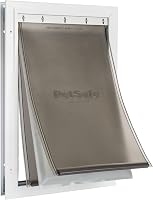
How to Choose a Dog Door: 6 Questions to Ask First
Choose a dog door by matching the opening to your pet, the door to your home, and the features to your weather and access needs. Measure your dog and doorway before comparing flap styles.
On this page (7 sections)
Choose a dog door by matching the opening to your pet, the installation to your home, and the access features to your routine. Measure your dog and doorway first, then compare flap design, weather protection and how you want to control access.
A door that is too small can be awkward for your dog, while an opening in the wrong place can be hard for your household to use. These 6 questions can help you narrow the choices before you buy.
For a broader look at styles for dogs and cats, see our pet doors guide.
How large should the dog door opening be?
Choose an opening your dog can pass through comfortably, based on shoulder height and chest width, not weight alone. The flap should allow a natural step through without your dog having to crouch or squeeze.
Measure your dog while standing. Compare those measurements with the door's flap opening, and check the step-over height if lifting a paw over a raised sill may be difficult.
Some doors also give a weight range, but use it as a starting point rather than a substitute for measuring. For a step-by-step method, follow our guide to measuring your dog and door.
What size dog door should I choose for my dog?
Start with your dog's measurements, then choose a flap opening that gives a little room to pass through. The flap's clear opening matters more than the frame's outside size, since the frame does not tell you how much space your dog can use.
For example, the Baboni 3-Flap Plastic Dog Door, Large has a flap opening of 10 1/4 in wide by 16 1/4 in high. Baboni describes it for pets up to 100 lb, but you should still compare the opening with your dog's build.
Small dogs may need a lower step-over and a shorter flap than large dogs. See our dog doors for small dogs if your pet is a toy breed or has short legs.
Where will the dog door go?
Choose the installation location by thinking through your dog's route and your home's layout. The right location gives your pet a clear path while keeping the opening practical for people.
A door-mounted flap suits a compatible hinged door. If you have a sliding glass door and want to avoid cutting into the frame, a track insert is another option.
It occupies part of the walk-through opening, so consider how much space people need.
A wall model can create a route where a regular door is not suitable. Measure the wall thickness and check the required cutout before deciding.
The Baboni Telescoping Wall Pet Door, 3-Flap Large is designed for walls 4 3/4 to 7 1/4 in thick.
If you are considering a sliding door, compare the fit and space trade-offs in our sliding glass dog door insert guide. For a wall opening, our wall dog door guide covers wall materials and installation choices.
What type of door or wall can you install it in?
Pick a dog door made for the surface you plan to cut or fit. Door thickness, wall depth and installation method vary, so confirm those measurements before ordering.
A door model may include a tunnel that fits a range of door thicknesses. Check that range against the actual door, including any trim or paneling that affects the opening.
For a wall installation, match the tunnel depth to the wall and account for the cutout size. Walls can contain wiring, plumbing or other obstacles, so check what is behind the proposed location before cutting.
If cutting is not an option, a sliding glass insert can fit into an existing track. The PetSafe 1-Piece Sliding Glass Dog Door, Large adjusts in height from 75 7/8 to 80 11/16 in and needs 13 1/2 in of track width beside the human door.
Do you need extra help keeping out drafts?
Choose a door with more flap layers or a magnetic closure if you want features aimed at reducing drafts. The result also depends on a close fit and careful installation.
A single flap may be enough in a mild climate or a sheltered location. In a drafty doorway, multiple flaps add layers between the home and outdoors.
Some designs also use magnets to help hold the flap closed.
The Baboni 3-Flap Plastic Dog Door, Large has two vinyl flaps with magnetic closure and an insulated middle flap. Baboni says its three-flap design helps protect against drafts, but the setup cannot guarantee an airtight seal.
Think about wind exposure, too. A flap facing a sheltered yard may behave differently from one exposed to strong gusts.
Our guide on keeping a dog door from blowing open covers practical wind concerns.
For more options focused on reducing winter drafts, see our insulated dog door guide.
Should the dog door control which pets can pass?
Choose an access control based on who you want to let through and when. A simple closing panel can block the opening, while an electronic model can respond to a key worn by a pet.
Manual closing panels are useful when you want to keep your dog inside overnight or while you are away. They can also block the flap when other animals are outside.
An electronic model may suit a home where you want selected pets to pass through. The PetSafe Electronic Collar Key Pet Door, Large works with a waterproof key worn on the pet's collar and can be programmed for entry, exit and auto-locking options.
It supports up to 5 keys and uses 4 D-cell batteries, which are not included.
Read our guide to locking a dog door if you want to compare ways to control access at night or while away.
What should you check before installing a dog door?
Before you buy, confirm the cutout, fit range and installation location. A few measurements can prevent a door that is too large, too small or unsuitable for the surface.
Use this checklist:
- Measure your dog's shoulder height and chest width.
- Compare those measurements with the flap opening and step-over height.
- Measure the thickness of the door or wall where you plan to install it.
- Check the required cutout dimensions against the space available.
- Confirm there are no hidden obstacles behind the planned opening.
- Consider whether you can make the cut and seal the edges correctly.
A pet door can be a permanent opening, so take time to plan its placement. If you rent, check whether a removable insert may fit your sliding door instead of cutting a door or wall.
Which dog door should you choose?
Choose a door flap if you have a suitable door and want a direct opening, a wall tunnel if the route through a wall fits your layout, or a sliding insert if you want to use a glass door track without cutting. Add multiple flaps for draft concerns or electronic access if you need to limit which pets can pass.
Start with your dog's measurements and your home's installation limits. Then compare the opening, fit range and access features that match your daily routine.
Frequently asked questions
How do I choose the right size dog door?
Measure your dog's shoulder height and chest width, then compare those measurements with the flap opening. The dog should pass through without crouching or squeezing, and you should check the step-over height too.
Weight can help narrow choices, but it does not replace measuring your dog.
Should I choose a dog door for a wall or a door?
Choose a door model if you want an opening in an existing compatible door, and a wall model if the route through a wall better suits your layout. Wall installation needs a tunnel that matches wall thickness and may involve more planning.
Check the cutout and installation instructions first.
Do three flaps keep a dog door warmer?
A three-flap design adds layers that can help reduce drafts, but it does not make a doorway airtight. Fit, flap closure, wind exposure and installation all affect how much air moves through.
If drafts are a concern, compare insulated options and read our winterizing guide.
Are electronic dog doors worth choosing?
An electronic dog door can limit access to pets wearing its collar key, which may help in a home with outdoor animals nearby. Check how it controls entry and exit, the number of keys it supports, its power source and installation needs before choosing one.