Can You Put a Dog Door in a Metal Door?
Yes, you can put a dog door in many metal or steel doors if the door's construction, thickness, and the pet door's instructions allow it. Check for internal supports and wiring, then match the frame and flap opening to your door and dog.
On this page (7 sections)
- Can you put a dog door in a metal door?
- What should you check before cutting a steel door?
- How do you choose a dog door for a metal door?
- Will a dog door make a metal door drafty?
- Can you install the dog door yourself?
- When should you skip cutting the metal door?
- Which dog door should you choose for a metal door?
Yes, you can put a dog door in many metal or steel doors if the door's construction, thickness, and the pet door's instructions allow it. Check what sits inside the cut area, measure the door and your dog, and choose a frame that fits both.
A metal door can have a hollow core, internal supports, insulation, or other parts that affect where an opening can go. Don't assume every steel door is built the same way.
Can you put a dog door in a metal door?
Yes, some dog doors are made to fit metal doors. Before cutting, confirm that the specific door and pet door are compatible and that the opening won't hit a support or hidden component.
The door's material alone doesn't tell you how it is built. Look for a manufacturer label or installation guide, and ask the door maker or an installer if the interior construction is unclear.
The pet door also needs to fit the door's thickness. For example, the MIAOTONG 3-Flap model is described as fitting metal doors from 1.2 to 2 in thick; the PetSafe Extreme Weather model fits metal doors from 1.5 to 2 in; and the PetSafe Freedom model fits doors from 3/8 to 2 in.
Check the model's instructions for its cutout dimensions, mounting method, and included hardware. A thickness match alone doesn't confirm that the frame will fit your planned opening.
What should you check before cutting a steel door?
Identify the door's construction and check the planned cut area before making an opening. Internal supports, wiring, insulation, and door hardware can change what is safe and possible.
- Find the door's maker, model, or installation guide.
- Confirm whether the door has a hollow core, foam, or internal reinforcement.
- Check that the proposed opening clears hinges, locks, handles, and other hardware.
- Compare the door thickness with the pet door's stated range.
- Follow the pet door and door makers' instructions for the cut and frame.
Don't cut if you can't tell what's inside the door or where the opening should go. Ask a qualified installer to assess it first.
If the door is part of a fire-rated assembly, security system, or other regulated installation, check with the responsible professional before altering it. Cutting may affect how the door is expected to perform.
How do you choose a dog door for a metal door?
Choose a model that fits the door thickness and gives your dog a suitable clear opening. Check the maker's compatibility instructions and measure your dog before settling on a size.
A large frame doesn't guarantee that its flap opening suits your dog. Measure your dog's height and width as described in how to measure for a dog door, then compare those measurements with the opening dimensions.
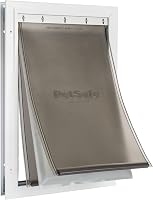
The PetSafe Extreme Weather Aluminum model fits metal doors 1.5 to 2 in thick and has three flexible flaps with a magnetic seal. It also includes a slide-in closing panel for controlling access.
The PetSafe Freedom Aluminum model fits doors from 3/8 to 2 in thick and includes a flexible flap and slide-in closing panel. Its stated flap opening is 10 1/4 in wide by 16 1/4 in high.
For more help comparing flap styles and access controls, see how to choose a dog door. If you are also considering a door in a different material, read whether a dog door can be installed in a glass door.
Will a dog door make a metal door drafty?
It can create a path for drafts, so look at the flap design and fit. A snug frame and multiple flaps may help reduce air movement, but they don't make an opening airtight.
The PetSafe Extreme Weather model has three flexible flaps and a magnetic seal. PetSafe says its flaps block three times more thermal energy than a standard pet door.
The MIAOTONG model also has three flaps. Its description says the design helps reduce drafts, but your result will depend on the installation and conditions around the door.
For more ways to manage air leaks, see how to stop cold air coming through a dog door. If wind is the main concern, how to keep a dog door from blowing open covers access and flap movement.
Can you install the dog door yourself?
You may be able to install it yourself if the door is compatible and you can follow the instructions safely. The models above include installation information or hardware, but the door's construction still matters.
Read the full instructions before cutting and check that you have the right tools and enough space to work. If the door has hidden supports, an unclear core, or parts you can't safely move or inspect, get help from an installer.
Plan for the finished frame on both sides of the door, along with the opening height your dog can use comfortably. Avoid cutting a metal door based only on a template before confirming the location and the inside structure.
Installation cost depends on the door, the chosen pet door, and the work required. Use how much a dog door costs to buy and install to plan the budget.
When should you skip cutting the metal door?
Skip the cut if you can't verify the door's construction or the pet door's compatibility. A surface that looks like a plain sheet of steel may hide features that make a cut unsuitable.
Consider another location or installation method if the door maker advises against cutting, the opening would interfere with hardware, or the door's role makes changes unsuitable. A wall tunnel or a patio insert may work better for some homes; compare wall dog doors and sliding glass dog door inserts.
Which dog door should you choose for a metal door?
For a dog door in a metal or steel door, start with the door's construction and thickness, then match the flap opening to your dog. The MIAOTONG model fits a stated 1.2 to 2 in thickness range, while the PetSafe Extreme Weather and Freedom models cover different ranges.
Pick a three-flap model if its thickness range and opening suit your door and dog. Consider the PetSafe Freedom model if its wider door thickness range is a better fit, and measure the opening before buying.
If you can't verify the planned cut area, have a professional check it first. For other styles and sizes, browse the door flap guide.
Frequently asked questions
Can you cut a dog door into a steel door?
Often, yes, if the door's construction and the pet door instructions allow it. Check the door for internal reinforcement, wiring, or other parts in the planned opening before cutting.
If you can't confirm what's inside or the door is part of a fire-rated or security system, ask a qualified installer.
What kind of dog door works in a metal door?
Choose a pet door specifically approved for your door material and thickness. Some models fit metal doors, but their compatible thickness ranges vary.
Measure the door and your dog's height and width, then compare both with the manufacturer's instructions before buying.
Does cutting a dog door weaken a steel door?
Cutting an opening removes part of the door, so it can affect strength, insulation, or the door's finish. The effect depends on the door's construction and the installation.
Check the door maker's guidance and use a pet door with a frame and installation method suited to that door.
Can you put a dog door in a hollow metal door?
Possibly, but a hollow door may have internal supports or a core that changes where and how you can cut. Identify the door's construction and check both manufacturers' instructions before starting.
If you can't inspect the cut area safely, have a door professional assess it.