How to Keep a Dog Door From Blowing Open in Wind
To keep a dog door from blowing open in wind, check that the flap and magnetic seal are clean, aligned, and undamaged, then use the closing panel when your dog doesn't need access. If wind still pushes the flap inward, inspect the fit and consider a multi-flap door.
On this page (7 sections)
- How do you keep a dog door from blowing open in wind?
- Why does wind push a dog door flap open?
- Can a three-flap dog door reduce wind and drafts?
- What should you check before replacing the flap?
- Should you close or lock a dog door during high winds?
- How can you tell if the door is fitted correctly?
- What is the best next step if wind still lifts the flap?
To keep a dog door from blowing open in wind, check that the flap and magnetic seal are clean, aligned, and undamaged, then use the closing panel when your dog doesn't need access. If wind still pushes the flap inward, inspect the fit and consider a multi-flap door.
A flap that swings in gusts can let in drafts and make the opening harder to manage. Start with the simple checks below, and don't add weights or hardware that could catch your dog's paws or collar.
How do you keep a dog door from blowing open in wind?
Clean and inspect the flap, confirm it closes against the frame, and use the closing panel when access isn't needed. These steps address common causes without changing how your dog uses the door.
- Clear dirt, hair, and debris from the flap edges and frame.
- Check that the flap hangs straight and that its seal makes contact around the opening.
- Look for cracks, warping, loose fasteners, or gaps around the frame.
- Close the door with its panel during strong gusts if your dog can stay inside.
- If the flap still lifts, review the installation instructions and consider a design with more than one flap.
Don't tape a flap shut while your dog needs to pass through, and don't attach a homemade weight. Either can interfere with safe, easy movement.
For more ways to reduce airflow around the opening, see how to stop cold air coming through a dog door.
Why does wind push a dog door flap open?
Wind can lift a flap when its seal doesn't sit evenly against the frame. A worn edge, debris, loose fit, or strong gust may stop the flap from settling closed.
Stand inside and watch the flap after your dog passes through. If it swings but doesn't return to the frame, check the hinge or hanging points according to the door's instructions.
Look around the outer frame for gaps between it and the door or wall. Don't cover gaps with a material that blocks the flap, drainage, or any moving part.
A multi-flap design may help cut drafts by adding barriers. For broader insulation advice, read how to winterize a dog door.
Can a three-flap dog door reduce wind and drafts?
A three-flap door adds layers that can help reduce drafts, while a closing panel gives you a way to block access. The fit and correct installation still matter, and no flap design can promise to stay shut in every gust.
The MIAOTONG large model has three flaps and a metal sliding lock panel. It fits wood, PVC, and metal doors from 1.2 to 2 in thick; its flap opening measures 10 7/8 x 17 1/2 in.
Choose it only if the opening size suits your dog and your door thickness falls within that range. The maker describes the flaps as overlapping and magnetic, but your installation and the wind around your home affect how the door behaves.
What should you check before replacing the flap?
Replace a flap only after confirming that the current one is damaged or no longer fits its frame. A new flap can help restore closure, but it must match the door model.
The PetSafe Freedom replacement flap is designed for several PetSafe doors, including the Extreme Weather Pet Door and Freedom Aluminum Pet Door. Its medium opening measures 8 1/8 x 12 7/8 in and has four adjustment holes at the top.
Check your door model and flap size before choosing a replacement. A flap that doesn't fit the frame may leave gaps or fail to close properly.
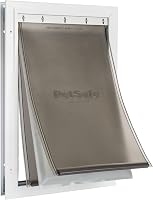
If you have a PetSafe Extreme Weather door, its adjustable flexible flaps have a magnetic seal. The medium model is designed for exterior doors 2 in thick.
The PetSafe door includes a slide-in closing panel for controlling access. Check the fit and door thickness before buying, and compare options in our guide to insulated dog doors for winter drafts.
Should you close or lock a dog door during high winds?
Yes, use the door's closing panel when your dog can stay inside and you want to block wind from the opening. Follow the door's instructions so the panel sits correctly.
If your pet needs outdoor access, plan supervised trips instead of leaving the flap open in dangerous weather. Keep your dog indoors during severe conditions.
For routine nighttime or away-from-home access, see how to lock a dog door. A lock panel can restrict access, but it doesn't replace a secure exterior door.
How can you tell if the door is fitted correctly?
Check that the frame is secure and the flap moves freely before judging its wind resistance. A crooked frame or poor fit can keep the flap from sealing.
Follow the manufacturer's instructions for the door material and thickness. Avoid tightening or altering parts beyond the directions, since that can bind the flap or damage the frame.
If you're planning a new installation, measure your dog and door for a pet door before choosing a size. A correctly sized opening helps your dog pass through without forcing the flap.
What is the best next step if wind still lifts the flap?
If you're deciding how to keep a dog door from blowing open, start with cleaning, alignment, and the closing panel, then replace a damaged flap with a compatible one. If the opening remains drafty, consider a door with multiple flaps and check its fit carefully.
Choose the MIAOTONG model if its large opening and door-thickness range suit your setup. Consider the PetSafe Extreme Weather model for a medium opening, or its compatible replacement flap if the existing flap is worn.
For help choosing a style before replacing the whole door, see how to choose a dog door.
Frequently asked questions
Why does my dog door blow open in the wind?
Wind can push a flap that doesn't close fully, has a worn or misaligned seal, or sits in a frame with gaps. Check for dirt, damage, and loose parts around the flap and frame, then close the door and watch whether the flap settles against its seal.
Strong gusts may still move a flexible flap.
Can I put a weight on a dog door flap?
Avoid adding weights or objects that could catch, swing, or make the flap hard for your dog to push through. They may create a snag or pinch point and can interfere with the flap's closure.
Use the door's closing panel or follow its installation and care instructions instead.
Do three-flap dog doors help in windy weather?
A three-flap design adds layers that can help reduce drafts, but it doesn't guarantee that a flap will stay shut in every wind condition. Check the door's fit, seals, and installation as well.
The opening must also suit your dog so the flaps can move and close freely.
Should I lock a dog door during a storm?
Use the door's closing panel if you want to block access during strong winds or storms, and keep your dog indoors when outdoor conditions are unsafe. Make sure the panel is fitted as directed and your dog has another way to go outside when needed.