How to Install a Pet Door in a Storm Door
To install a pet door in a storm door, check that the door is a suitable material and thickness, mark the template, cut the opening, then fit and seal the frame. Follow the pet door’s instructions and the storm door maker’s guidance.
On this page (7 sections)
- Can you install a pet door in a storm door?
- What should you check before buying a dog door for a storm door?
- How do you install a pet door in a storm door?
- What if the storm door has glass or screen?
- How do you check the installation afterward?
- When should you hire a professional?
- Which pet door should you choose for a storm door?
To install a pet door in a storm door, confirm the door is compatible, mark the opening with the supplied template, cut carefully, and secure the frame. Check the storm door’s construction and both manufacturers’ instructions before making any cut.
A storm door may be aluminum, another metal, or a framed panel with glass or screen. Those materials call for different approaches, so don't assume a standard cutting template works for every storm door.
Can you install a pet door in a storm door?
You can install one if the storm door’s material, thickness, and frame support the pet door. Check the storm door instructions and pet door requirements before choosing a spot or cutting.
A framed metal panel may accept a compatible door-mounted pet door, while a glass or screen section needs a different solution. Don't cut glass or a mesh panel using instructions meant for a solid door.
Measure the storm door thickness where the pet door will sit. Some models fit only a narrow thickness range, and a mismatch can prevent the frame from fastening securely.
For a broader overview of styles and placement, see our guide to pet doors for dogs and cats. If the storm door is mostly screen, read how to install a dog door in a screen door.
What should you check before buying a dog door for a storm door?
Match the pet door to the storm door’s material and thickness, then check the flap opening against your pet’s measurements. A door that fits the panel still needs an opening your pet can use comfortably.
Measure the panel and its frame to make sure the cutout will not overlap the door’s edge, rails, handle, latch, or glass. Check that there is enough flat surface on both sides for the pet door’s frame and fasteners.
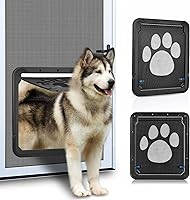
The PetSafe Freedom Aluminum Pet Door, Medium has a metal frame and is described for indoor and outdoor storm, wood, PVC, and metal doors. Its compatible door thickness is 3/8 to 2 in, and its flap opening is 8 1/4 in wide by 12 1/4 in high.
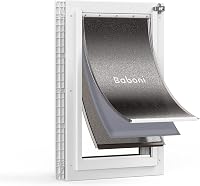
The Baboni 3-Flap Plastic Dog Door, Medium is made for doors 1 3/8 to 1 31/32 in thick. Its flap opening is 8 1/4 in wide by 12 1/4 in high, and its template calls for a 9 19/32 by 15 1/16 in cutout.
The Ideal Pet Products Air Seal Pet Door fits doors from 1 1/4 to 1 3/4 in thick, with a stated cutout size of 8 1/4 by 9 7/8 in. Its hard panels have an air gap between them.
Check the pet door dimensions against the exact model instructions before ordering. To compare installation options for other materials, see can a dog door be installed in a glass door?.
How do you install a pet door in a storm door?
Follow the pet door’s template and instructions in order: measure, mark, cut, fit, and secure the frame. Stop if the storm door’s construction differs from the instructions or the opening would cross a rail, glass, or screen.
How do you choose the location?
Choose a flat section that leaves room for the complete frame on both sides. Keep the opening clear of the door’s handle, latch, rails, and other hardware.
Measure your pet’s height and width, then compare them with the flap opening. Our guide to measuring your dog and door for a pet door explains how to take those measurements.
How do you mark and cut the opening?
Use the template for your exact pet door model and check its alignment before marking. Confirm the cutout dimensions against the instructions, because the frame and flap dimensions are not the same as the opening size.
Secure the storm door panel so it cannot move while you work. Wear eye and hearing protection, and use a cutting tool suited to the door material and approved by the door maker.
Cut slowly along the marked line. Don't force a tool through a panel, and stop if you find hidden supports, wiring, or material that the instructions do not cover.
How do you fit and secure the frame?
Remove burrs or loose material only as the instructions allow, then place the frame into the opening. Check that its edges sit evenly against the panel before fastening it.
Use only the supplied or specified hardware, and tighten it as directed. If the frame shifts, the opening is uneven, or the fasteners don't hold, stop and correct the fit before letting your pet use the door.
Seal gaps only with a sealant approved for the storm door and pet door materials. Keep the flap clear of excess sealant and let any sealant cure for the time stated on its package.
What if the storm door has glass or screen?
Don't cut a glass or screen section with a template for a solid door. Use a pet door or insert designed for that panel type, or ask a qualified door or glazing professional about the options.
Tempered glass generally cannot be cut after it has been made. If your storm door includes a glass panel, check with the door maker before altering it.
A screen panel can tear or lose tension if cut without the right frame and screen-repair method. See our guide to installing a dog door in a screen door for screen-specific considerations.
If you want a pet opening in a glass patio door instead, compare the options in our guide to sliding glass dog door inserts.
How do you check the installation afterward?
Test the flap by hand, check that the frame is secure, and confirm the storm door still closes and latches. Keep your pet away until any sealant has cured and the opening is safe to use.
Look for sharp edges, loose fasteners, binding, or gaps around the frame. Make sure the flap swings freely and returns to its closed position.
Introduce the opening gradually, using treats or a familiar cue if your pet is unsure. Use the closing panel when you want to restrict access, if your model includes one.
Wind can move a flap or put pressure on a poorly fitted frame. For practical ways to manage that, see how to keep a dog door from blowing open.
When should you hire a professional?
Get professional help if the panel is glass, the material is unclear, or the cut would affect a rail, latch, or structural part. A door professional can check whether the panel can accept a pet door and what installation method it needs.
Also stop if the template does not fit the available flat area or you cannot secure the panel safely. Replacing a storm door panel can cost more than choosing a different pet-door location.
Which pet door should you choose for a storm door?
Choose a model only after confirming the panel material, thickness, flat space, and pet opening dimensions. The PetSafe Freedom Aluminum Pet Door, Medium is a fit to consider for compatible storm doors from 3/8 to 2 in thick.
The Baboni 3-Flap Plastic Dog Door, Medium fits a narrower thickness range, from 1 3/8 to 1 31/32 in. The Ideal Pet Products Air Seal Pet Door fits 1 1/4 to 1 3/4 in thick doors and has dual hard panels with an air gap.
If the storm door has glass or screen, choose a panel-specific solution or ask a professional before cutting. Once you have a compatible solid panel, follow the model’s template and instructions from the first measurement through the final fit.
Frequently asked questions
Can you install a pet door in a storm door?
Often, yes, if the storm door’s material, construction, and thickness suit the pet door and its installation method. Check both manufacturers’ instructions before cutting.
Some storm doors have glass or screen sections that need a different solution, and a door with a narrow frame may not leave enough room for the opening.
What tools do you need to install a dog door in a storm door?
The exact tools depend on the door and pet door. Common needs include a measuring tape, pencil, level, drill, and a cutting tool suited to the storm door material.
Use eye and hearing protection, secure the panel, and follow the cutting template and instructions for your specific model.
Can you put a pet door in a storm door with glass?
Don't cut through a glass panel with a standard pet door template. Glass may need a purpose-built insert or professional glazing work, and some tempered glass cannot be cut after manufacture.
Check the door maker’s guidance and consider a separate door or panel designed for a pet opening.
Does a pet door in a storm door cause drafts?
It can allow drafts if the flap, frame, or fit leaves gaps, and the storm door may add little protection if it doesn't close securely. Choose a compatible flap design, follow the sealing instructions, and check for loose edges after installation.
A closing panel can restrict access when you don't want the door in use.