Pet Doors for Dogs and Cats: How to Pick the Right One
The right pet door fits your pet, your entry point and the way you want to control access. Measure your pet and the installation area first, then choose a door flap, wall tunnel, patio insert or selective-entry cat door.
On this page (7 sections)
The right pet door fits your pet’s body, your home’s entry point and the access control you need. Measure your pet and the installation area before choosing among a door flap, wall tunnel, patio insert or microchip cat door.
A dog door that fits a hinged door may not suit a glass slider, and a large opening can be difficult for a small pet to push. Start with the route your pet will use, then check the opening and frame measurements.
For a quick overview of options by location, see our best pet doors for dogs and cats. This guide explains how to narrow the choice and what to measure before you buy.
What should you check before choosing a pet door?
Choose a pet door by checking four things first: your pet’s size, the installation surface, access control and weather exposure. These determine which designs can work in your home.
| Check | What to confirm | Why it matters |
|---|---|---|
| Pet fit | The pet’s width and height, plus the opening size | Avoid a tight passage or a flap too difficult to use |
| Installation surface | Hinged door, wall, sliding glass door or another surface | Each style has different fit and cutting needs |
| Access | Whether you need to limit entry, exit or all movement | A flap or lock may control access in different ways |
| Weather | Wind, rain and cold exposure at the opening | Flap layers and a closing panel can help reduce exposure |
Measure your pet in a natural standing position and use the method in our guide to measuring for a dog door. For a multi-pet home, check the largest pet that will use the opening and consider whether smaller pets can push the flap.
Then look at the intended installation area. A pet door must fit the surface and the available thickness or height range, not just the pet.
Which pet door style fits your home?
Choose the style based on where you can install an opening and whether you need a removable setup. A door flap, wall tunnel, patio insert and microchip cat door solve different access problems.
Door flaps for hinged doors
A door flap is a common choice when you can cut an opening in an interior or exterior door. Check the door thickness range, frame size, cutout size and flap opening before you start.
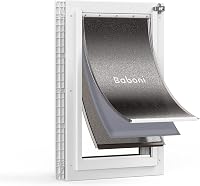
A three-flap model can suit an exposed entry where you want layers between outdoors and indoors. The Baboni has two vinyl flaps with magnetic closure and an insulated middle flap, and its telescoping tunnel fits doors 1 3/8 to 1 31/32 in thick.
The Baboni’s cutout is 11 2/5 x 19 3/8 in, so measure carefully before cutting. See our door flap options and guidance for more styles, sizes and installation considerations.
Wall tunnels when a door is not the right place
A wall tunnel can work when a hinged door is unavailable or unsuitable for cutting. It needs a wall opening, and the tunnel must match the wall thickness.
The PetSafe Wall Entry Telescoping Pet Door fits walls 4 3/4 to 7 1/4 in thick. Compatible extension kits are sold separately for thicker walls, and the double flap has a slide-in closing panel.
Before you choose a wall location, check what is inside the wall and consider the opening on both sides. Our wall tunnel guide covers wall entry options, while installing a dog door in a brick wall explains why masonry needs special planning.
Patio inserts for sliding glass doors
A patio insert is useful when you want a pet passage in a sliding glass door track without cutting the existing glass. Check the insert’s height range, track fit, flap opening and how the patio door closes beside it.
The VEVOR sliding glass door insert adjusts from 75 7/8 to 80 11/16 in tall. Its flap opening measures 10 1/4 x 16 1/4 in, and the insert has a locking design.
Confirm your track height against the adjustment range and check how much room the insert leaves for locking the patio door. Compare more options in our sliding glass dog door insert guide.
Microchip cat doors for selective access
A microchip cat door can limit entry to recognized cats, which may help keep unfamiliar animals from following them inside. Check chip compatibility, flap size, battery needs and installation location.
The SureFlap Microchip Cat Flap reads compatible 9, 10 and 15 digit microchip numbers. Its opening measures 4 3/4 in high by 5 5/8 in wide, and it uses four AA alkaline batteries.
This flap screens on entry, so check whether that matches how you want your cat to move. A programmable collar tag is sold separately for cats without a compatible microchip; see our microchip cat door guide for more access-control choices.
How do you measure a pet for a door?
Measure the pet and the opening separately. The pet’s body measurements help you choose an opening, while the installation measurements tell you whether the frame can fit.
For a dog, measure height from the floor to the top of the shoulders, then measure the widest part of the chest or shoulders. For a cat, check its chest width and body height, and consider whether it can push the flap.
Use the exact flap opening, not the outside frame size, when checking passage. A frame can be much larger than the space the pet walks through.
Next, measure the installation area. For a hinged door, check thickness and confirm the required cutout; for a wall, measure its full thickness; for a patio insert, measure track height and available width.
If more than one pet will use the door, fit the largest pet while also checking whether the smallest can operate the flap. Our how to choose a dog door guide walks through the questions to ask before settling on a size.
What access control should a pet door have?
Choose access control based on when you need to stop passage and which animals should be able to enter. A manual panel, a lock or a microchip reader each addresses a different need.
A slide-in panel or manual lock can close a pet door when you are away or want to keep pets inside. Check whether the control blocks both directions and whether it is easy for a person to reach.
For selective entry, a compatible microchip flap reads a recognized pet’s ID. The SureFlap can learn up to 32 identities, but it screens on entry only, so it does not control the direction your cat exits.
If you need a door that opens electronically for a pet, compare the design with our automatic dog door guide. Check the specific access method before buying, since “automatic” can mean different things across pet doors.
How can you limit drafts and weather exposure?
Choose a flap setup that matches the weather at the opening and closes reliably after use. Multiple flaps or a closing panel can add a barrier, but fit and placement matter too.
An exterior door exposed to wind may need more protection than an interior door between rooms. Check the number and material of flaps, how they close, and whether the door includes a panel for times when pets do not need access.
Keep the frame square and follow the installation instructions so the flap can move and close as intended. After installation, check for gaps around the frame and at the flap edges.
For more ways to address cold air, read how to stop drafts around dog doors and our guide to winterizing a pet door.
Can you install a pet door yourself?
You may be able to install a pet door yourself when you can safely make the required opening and follow the model’s instructions. The job depends on the surface, the cutout and the tools or skills available.
Some products include a cutting template and step-by-step instructions. A wall opening, glass panel or metal door can call for different methods, and a mistake can be difficult to repair.
Check the installation instructions before buying, not after cutting. For a patio insert, confirm the adjustment range and track fit; for a wall door, confirm the full wall thickness and any extension needs.
If the opening involves glass or a structural wall, consult a qualified installer about the work. Our guides explain pet doors in glass doors and pet doors in metal doors.
Which pet door is the best fit for your situation?
Pick a door flap if you have a suitable hinged door and want a direct opening through it. Choose a wall tunnel when the wall is the better route, or a patio insert when you need a sliding glass door option without cutting the glass.
For a cat that needs selective entry, a compatible microchip flap can restrict entry to recognized pets. Before ordering any style, confirm your pet’s measurements, the opening size and the installation range, then check the access and weather features against your routine.
When you are ready to compare specific options, start with our best pet doors for dogs and cats guide.
Frequently asked questions
How do I choose the right pet door?
Choose by measuring your pet, identifying where the door will go and deciding how you want to control access. Check the flap opening and the installation range, then consider weather exposure, a locking panel or selective entry.
A pet should pass through without squeezing, and the frame must suit the door, wall or patio track.
Is a wall pet door better than a door flap?
A wall pet door can work when you cannot or do not want to cut an entry door, while a door flap fits a suitable hinged door. Wall installation involves cutting through the wall and matching its thickness to the tunnel or extension.
Check the wall construction and plan the route before choosing either style.
Can a cat use a dog door?
A cat can use a dog door if the opening is low and wide enough for the cat to pass through comfortably. A large flap may be harder for a small cat to push, and it can give other animals access too.
A microchip cat flap can limit entry to recognized pets.
How do I keep other animals from using a pet door?
Use a door with access controls that match the problem. A manual closing panel can stop all passage when closed, while a compatible microchip flap can allow recognized cats to enter.
Check whether access control applies to entry, exit or both, and lock the door when you need a full barrier.
Do pet doors let cold air into the house?
A pet door can allow drafts, especially if the flap does not close well or faces wind and cold weather. Double or triple flaps and a closing panel can help limit exposure, but fit and installation matter too.
See our guide to stopping drafts around dog doors for ways to reduce them.